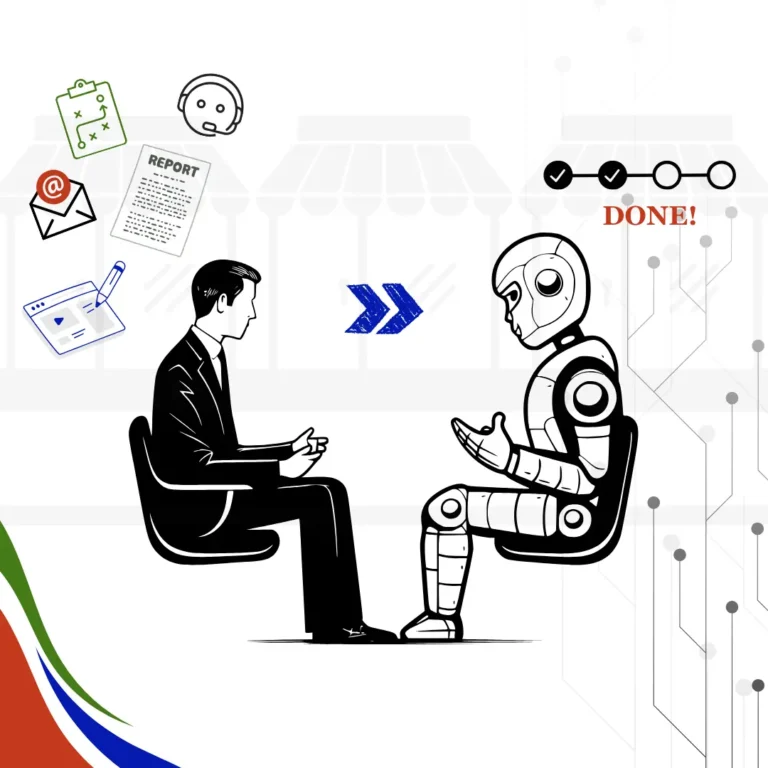
Digital marketing for small businesses often fails, not because of lack of effort, but because of the wrong approach.
Many business owners post consistently, experiment with ads, and try different tactics, yet they see little to no results.
The problem is not effort.
The problem is structure.
In reality, digital marketing for small businesses requires a clear system, not random actions. Without that, even the most active marketing efforts won’t lead to growth.
In this article, we break down the most common reasons why digital marketing fails, and how to fix it with a structured approach.
1. Digital Marketing for Small Businesses Fails Without Strategy
Posting content regularly does not equal having a strategy.
Many small businesses focus on activity instead of direction. Without clear goals, defined audiences, and a structured plan, marketing becomes noise.
A real strategy answers:
- Who are we targeting?
- What problem are we solving?
- What action do we want users to take?
Without these answers, marketing will always underperform.
2. They Don’t Understand Their Audience
Digital marketing for small businesses becomes ineffective when messaging is too general.
Many businesses create content based on what they want to say, instead of what their audience needs to hear.
Understanding your audience means identifying:
- Pain points
- Needs
- Buying behavior
The more specific your messaging, the stronger your results.
3. They Rely on Tactics Instead of Systems
Trying ads, posting reels, or using tools without a system leads to inconsistency.
Tactics can create short-term spikes, but systems create long-term growth.
A strong system includes:
- Consistent messaging
- Content direction
- Funnel structure
- Measurable actions
Without a system, digital marketing for small businesses becomes guesswork.
4. They Ignore Brand Positioning
If your business sounds like everyone else, there is no reason for customers to choose you.
Strong positioning defines:
- What makes you different
- Why your audience should trust you
- What you stand for
Without clear positioning, even well-executed marketing will struggle to convert.
5. They Don’t Track What Actually Matters
Many small businesses focus on vanity metrics like likes and followers.
But real growth comes from tracking:
- Website traffic
- Lead generation
- Conversion behavior
According to insights from HubSpot, businesses that track performance data consistently make better marketing decisions over time.
6. They Expect Immediate Results
Digital marketing for small businesses is not instant.
Many businesses give up too early because they don’t see quick results. In reality, marketing requires consistency and time to build momentum.
7. They Don’t Connect Marketing Efforts Together
Many businesses treat each channel separately.
Social media, website, and email should work together as one system, not separate efforts.
When everything is connected, results become more predictable.
How to Fix Digital Marketing for Small Businesses
To make digital marketing work, shift from random actions to a structured system:
- Strategy: Define goals and audience
- Content: Create value-driven messaging
- Positioning: Stand out clearly
- System: Connect all marketing channels
- Measurement: Track what matters
This approach transforms marketing from confusion into clarity.
What This Means for Your Business
If your marketing isn’t working, it’s not because you’re not doing enough.
It’s because the system behind your marketing isn’t strong enough.
Once you build structure, everything changes:
- Content becomes effective
- Messaging becomes clear
- Results become predictable
Digital marketing for small businesses doesn’t fail on its own, the approach does.
By focusing on strategy, understanding your audience, building systems, and tracking performance, you can turn your marketing into a real growth engine.
If you want to build a structured digital marketing system instead of guessing what works, learn more at Expansion Do (expansiondo.com)
According to research by HubSpot, businesses that follow a clear marketing strategy are more likely to achieve consistent growth.hubspot.com
What is digital marketing for small businesses?
Digital marketing for small businesses refers to using online channels such as social media, search engines, and websites to attract, engage, and convert customers in a cost-effective way.
Why does digital marketing fail for small businesses?
Digital marketing often fails because businesses focus on tactics instead of strategy, don’t understand their audience, and lack a structured system to guide their efforts.
How can small businesses improve their digital marketing?
Small businesses can improve their digital marketing by focusing on strategy, creating consistent content, building a strong brand position, and tracking meaningful performance metrics.
How long does digital marketing take to work?
Digital marketing is a long-term process. Most small businesses start seeing measurable improvements within a few months when they follow a consistent and structured approach.